

Environment Court rezones final seven hectares of Sticky Forest

Maddy Harker
05 March 2026, 4:06 PM
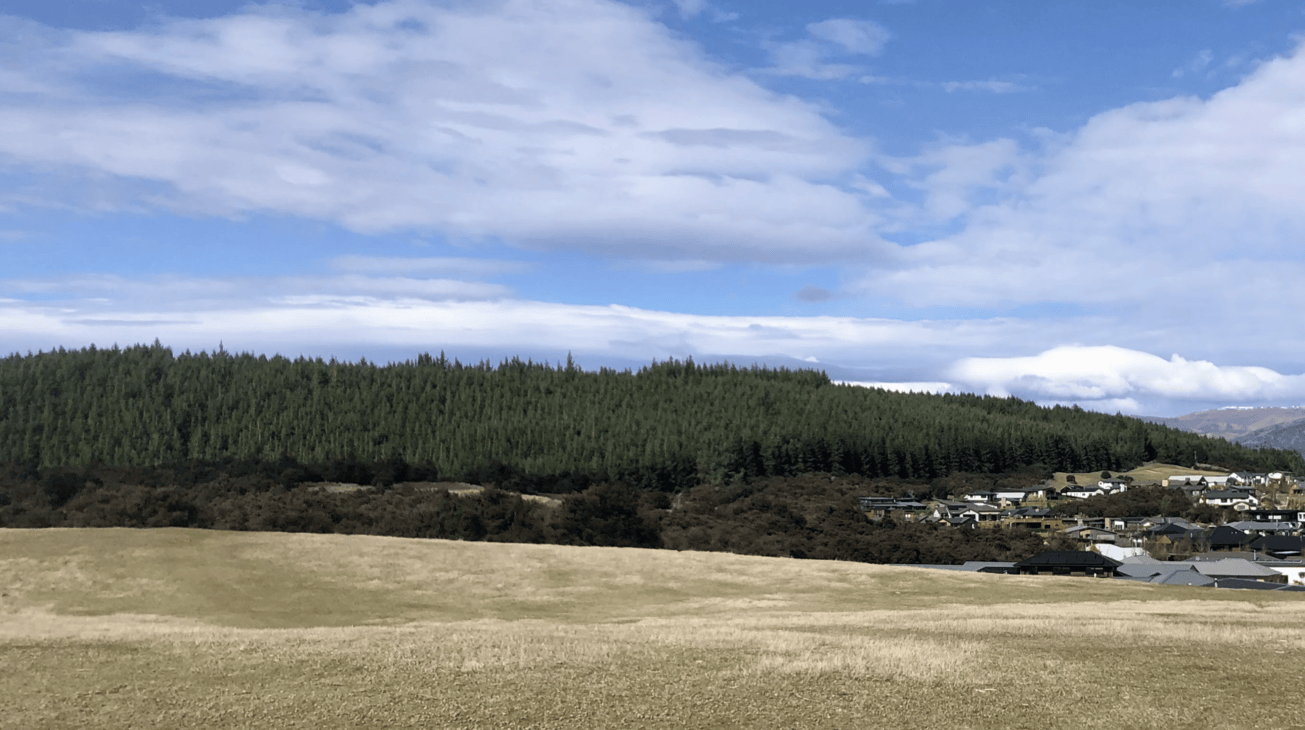 Sticky Forest seen from Peninsula Bay Reserve.
The Environment Court has made a final decision on the long-running Sticky Forest appeal, ruling that the last seven hectares of the site be rezoned from rural to large-lot residential (LLR).
The 51-hectare Sticky Forest - on Wānaka’s skyline, between the Clutha River outlet and the Kirimoko residential subdivision - has been the focus of several court decisions over the past few years.
Earlier rulings had already allowed 19 hectares to be rezoned to LLR and lower-density suburban residential (LDSR), while 25 hectares remain protected as part of the Dublin Bay Outstanding Natural Landscape (ONL).
The remnant land had “remained unresolved following earlier decisions”, the court said in its ruling on February 2.
After reviewing public submissions and expert planning advice, Environment Court judges J Hassan and S Tepania and Environment Commissioner J Baines confirmed that LLR zoning is more logical than rural for the remaining seven hectares.
The appellants - Mike Beresford and Theo Bunker (both now deceased), and Lorraine Rouse - had not sought rezoning of this remnant land.
Sticky Forest has been used informally by members of the public for biking and walking for many years.
It has a complex ownership history: the Crown gifted it in the 1960s to 57 Māori grantees under the South Island Landless Natives Act as substitute land after they lost ownership of the Hāwea-Wānaka block known as ‘The Neck’. The list of owners has since grown to more than 2,000 descendants.
Previous appeals and court decisions have described Sticky Forest as a “conundrum” due to the unique set of circumstances surrounding the land.
Queenstown Lakes District Council has been directed to update the district plan and planning maps to reflect the new zoning for the last piece of Sticky Forest.
PHOTO: Wānaka App