


Peruvian Magic, Copacabana to Cusco (Travel)
Fran Tate, Director, Latin Link Adventures.
30 January 2020, 8:07 PM
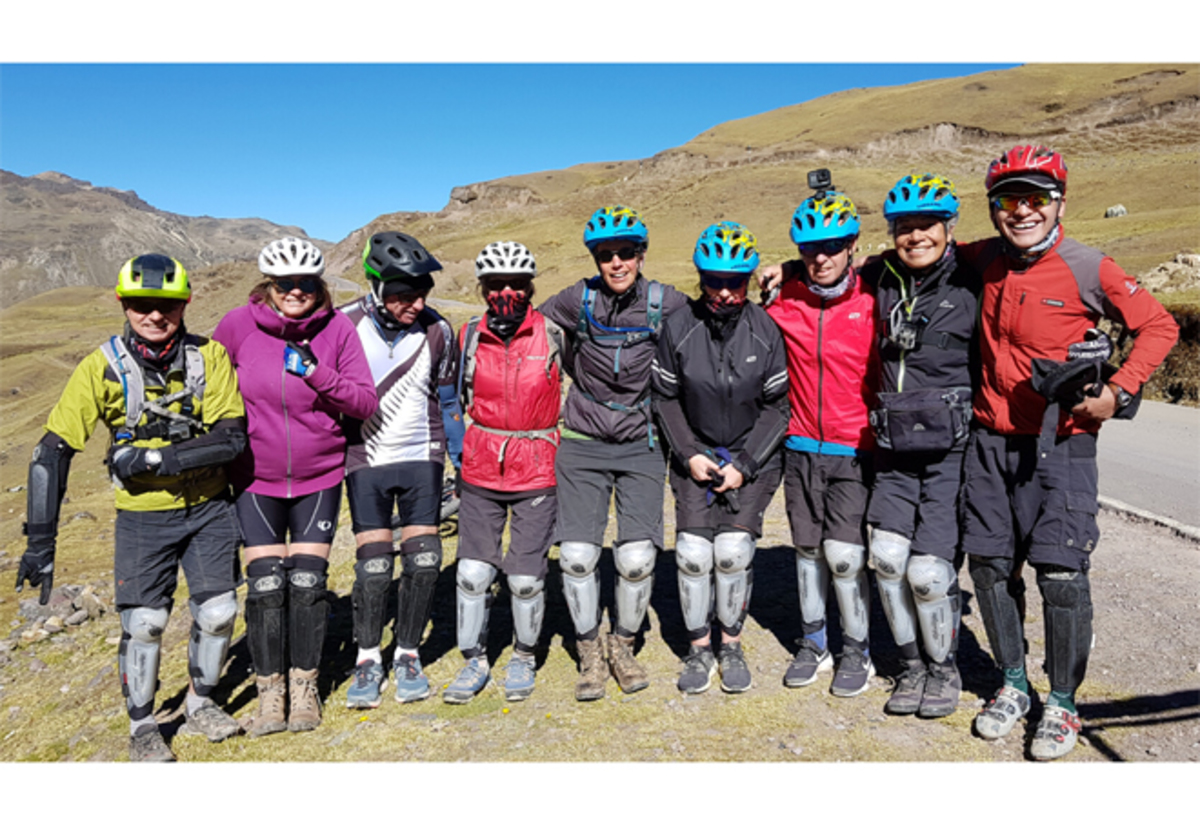
Puno, at 3800m is our first stop in Peru.
Our relaxed afternoon starts travelling by van through extensive farmland and cropping areas, following Lake Titicaca north to Puno. The landscape is impressive. We overnight in Puno, visit the spectacular 17th century Andean Baroque Cathedral, the main Plaza de Armas and dine at one of the many good eateries in town.
Next morning my group is taken by tribikes to the port to catch the ferry which takes us to the magical Uros Floating Islands. What a treat! You can imagine the yahooing of the group amidst the chaos of the busy Puno traffic. The islands are located not far from Puno, on Lake Titicaca and even now, remain a tranquil haven from the bustle of the city.

Totora reeds, found in the lake, form the foundations of the floating islands. The roots are woven together for stability. It’s interesting to note that the Uros people still maintain some of the old traditions and have developed a craft industry from the reeds.
It’s a pleasant interlude but now it’s time to board the tourist bus for Cusco. It’s a 10 hour journey in comfort with 5 stops on the way, 2 archeological sites, the highest point of the trip, Rachi at 4000m, the Temple of Viracocha and a lunch stop with a Folkloric performance of song and dance. There are a few markets en-route and the group flit in and out of the stalls with gusto. I remind the group that there is plenty more to see over the next several days.
The bus trip to Cusco is a great introduction to Peru. Cusco is the gateway to the Sacred Valley of the Incas and Machu Picchu, with a population of 428,000 inhabitants. We arrive in the late afternoon, it’s Fiesta time and the streets are teeming with tourists and folk groups practising for the Inti Raymi, one of the largest events in Peru. It’s a beautiful city with Spanish Colonial and Incan architectural influences everywhere. The atmosphere is electric. We’re here to take in the cultural diversity, watch the festivities, admire the remnants of the Inca temples and the colonial churches and RIDE.
It's the time of year when local groups strike for better wages and conditions. The strikes can be very disruptive. Our guides tell us that we must leave early morning, a 4am departure to avoid blockages on the road! There’s a collective groan but we’re ready. Manolo is driving. His experience and knowledge of the area means that we avoid the worst of the blockages. Fires are burning and huge rocks have been deposited in the main roadways to the Sacred Valley. The activity is a little unsettling. Thankfully we get through without mishap and start the day’s ride from Chinchero at 4000m to the fabulous Moray, an area with circular depressions winding down to the bottom of the ruins.
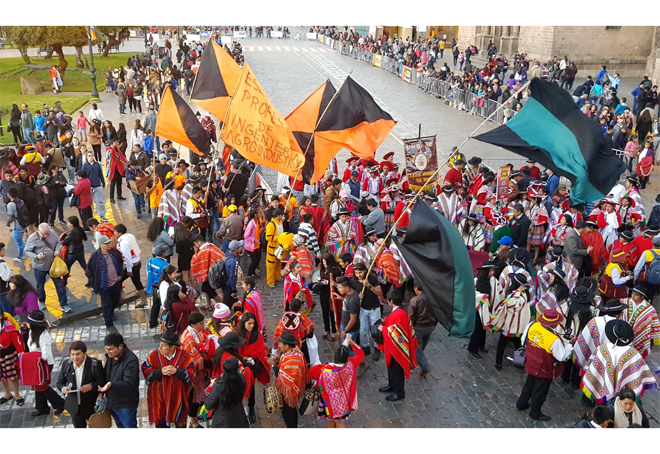
Fiesta in Cusco - Inti Raymi
From top to bottom there are distinct variations in temperature. Amongst scholars there is some debate as to the purpose of this area. The landscape is mind blowing with 2 snow-capped mountain ranges dominating the distant vista. The riding is easy to moderate, with some hard uphill, then challenging single track downhill, interpersed with some blind corner surprises! We visit the Maras de Salinas, an old salt mine. We are amazed at the old methods still being used today to extract the salt. I always buy some as I find the salt delicioso!
The day ends at the San Augustin Monasterio Urubamba, a converted monastery now providing high end accomodation. We are happy to be there, it’s been a big day! That night we sleep exceptionally well, ready to ride to the Lares Pass at 4000m and the cross country downhill through the Totora canyon.
Next morning we head off in the van and pass through the small town of Calca and then start to ascend the road to the Lares Pass. The surrounding hillsides are terraced, a sign of past and present Inca occupation. We stop close to the settlement of Totora and get ready to bike the last 18km uphill to the Lares Pass. It’s a demanding uphill and some of the group pair up to ride together. It’s easier!
We celebrate making the pass at 4000m with lunch and a photo before riding down to the Old Inca trail, which passes through the Totora canyon. The start of the trail is off road and as we ride down, we can see groups of men, women and children tending the potato crops. It’s a communal affair. The gradient of the slope is very steep. Juan Carlos, our head guide, points out the ancient Inca tools being used. He hands over the trail toll, 2 bags of coca leaves and we ride on. Life is simple!
Our two guides tell us what to expect next. There’s a mix of llama tracks, old water ducts, rocks, gravel, grass, running water and consequentially, mud. There are narrow parts through the gorge and of interest are the Inca tombs dug high up in the canyon walls. There are steep zig zag short descents over rock, alongside a river several metres below the track. There are lots of small settlements on the way. Focus is paramount!
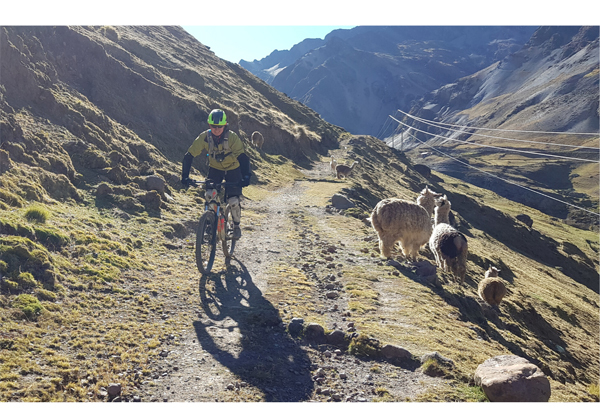
Enjoying ride - Old Inca Rd, Lares Pass
Our group arrive without mishap, phew! I relax.
We drive to Calca and acknowledge a great ride with a beer and an ice cream. One more night at the Monasterio (no hardship), dinner in Urubamba and then we prepare for the highlight of our Peruvian adventure, Machu Picchu.
Keep tuned for the final chapter of my Peruvian Magic Blog, Machu Picchu and the fabulous Manu National Park.
For more information on this tour and the many other escorted tours, independent packages and active adventure tours available contact Fran and Gary on 03 443 5036.