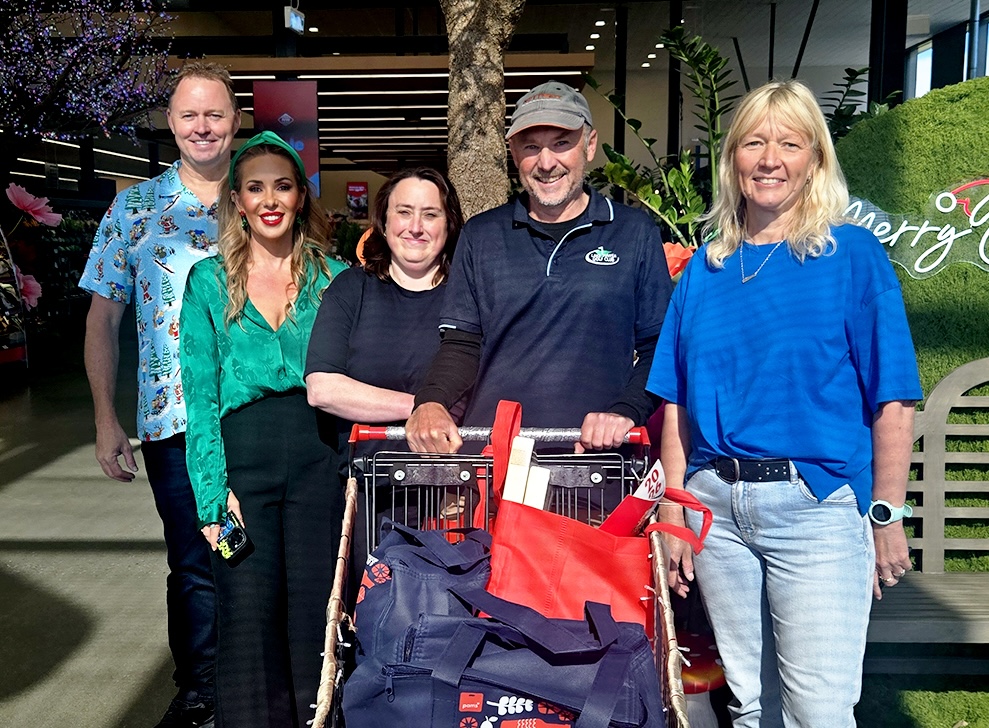

New polytech programmes for Central Otago

04 December 2025, 4:00 PM
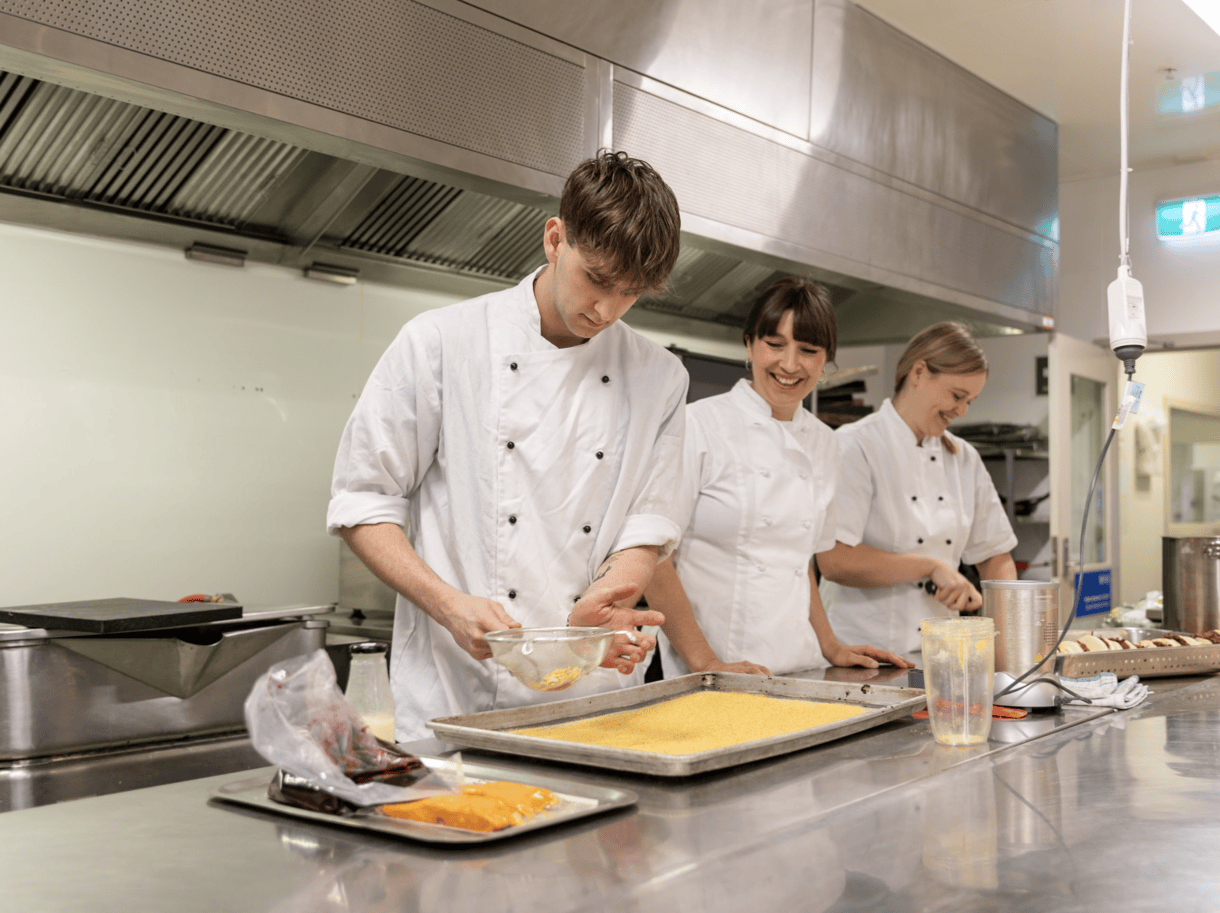 Dunedin student Yannick Medvecky-Wolkenhauer (left) works in the kitchen with the guidance of Food Design Institute lecturers Chloe Humphreys and Juliane Tautz
Otago Polytechnic is cooking up a new suite of programmes for the Central Otago community, following moves to reduce its physical footprint and focus resources on a more sustainable range of programmes.
Otago Polytechnic operations deputy executive director Max Sims said approval has been given to deliver a level four cookery programme through a new Work Integrated Learning (WIL) model in the region, with the first intake in February 2026.
The WIL pathway is designed to support a wide range of learners already working within the hospitality industry (for a minimum of 20 hours paid employment per week).
Max said this includes staff in restaurants, cafés, hotels, and catering operations, as well as those employed in food service roles across tourism, retail, and institutional settings.
“The flexible one-year, fulltime programme allows learners to remain in paid employment and is ideal for emerging chefs who want to formalise their skills and kitchen staff looking to step into more skilled positions,” he said.
“It also suits employers wanting to develop committed, motivated team members without removing them from the workplace.”
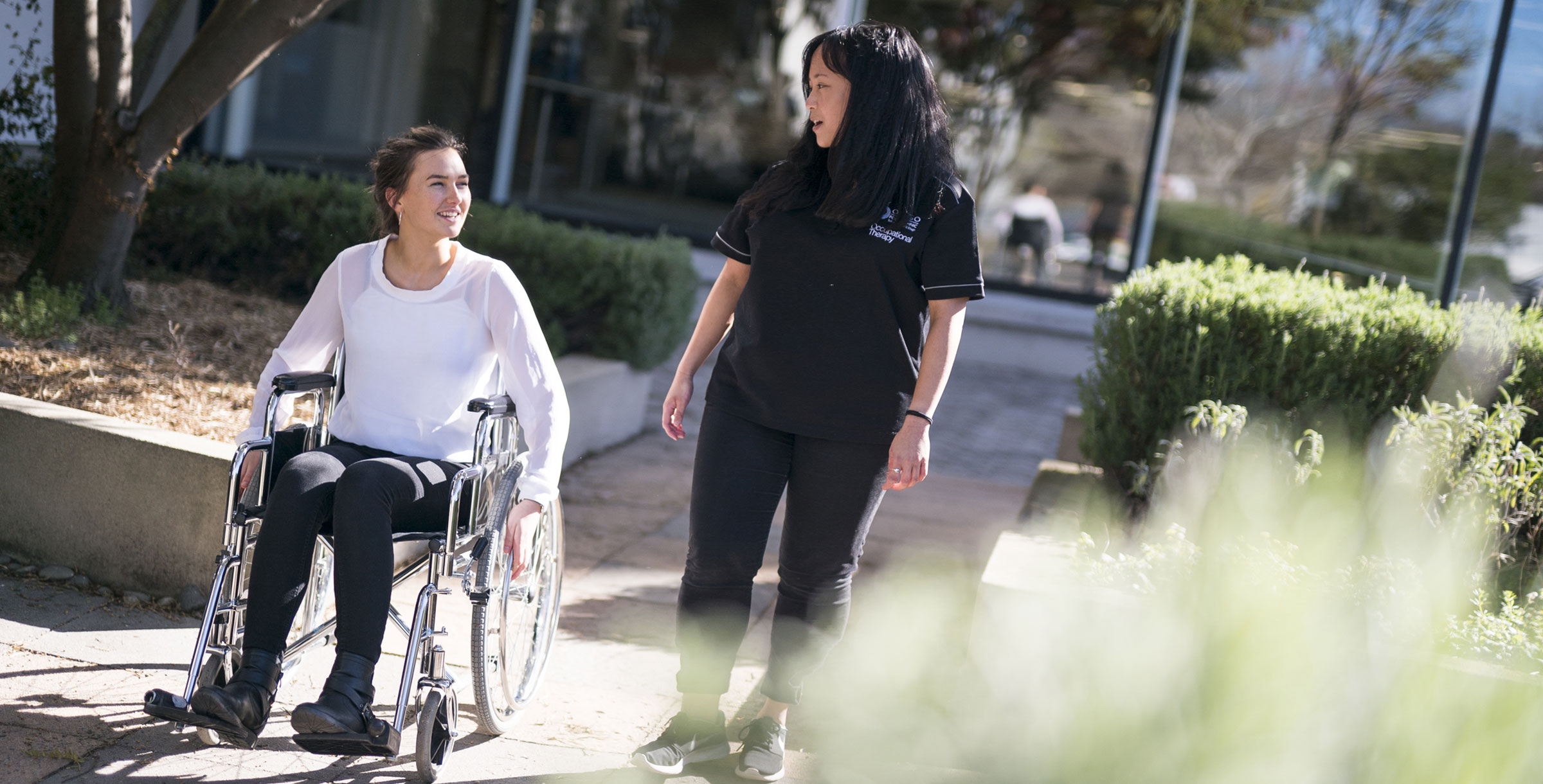
Occupational Therapy students explore the level of accessibility at Otago Polytechnic's Dunedin campus.
The flexible learning is integrated into each trainee’s day-to-day role, and includes weekly one-on-one meetings with an Otago Polytechnic teaching staff member. They’ll also attend specialist technical masterclasses to be held in a professional kitchen at Dunstan High School.
“We’ve already had positive interest from across the local sector and have begun conversations with some of Central Otago’s largest hospitality employers,” Max said.
Meanwhile, Otago Polytechnic is pursuing approval to deliver its Bachelor of Occupational Therapy programme via a similar Work Augmented Learning pathway in Central Otago.
Learners are required to be already in work in a health or wellbeing context (paid or volunteer) for a minimum or 15 hours per week (including in hospitals, community services, and schools), and able to undertake a mix of campus-based and online learning opportunities.
“Otago Polytechnic believes creating a pool of therapists who are already local and have trained in the context of their own community has the potential to better meet the growing demand on health resources being experienced in the region,” Max said.
He said the Central Otago team recently had a positive site accreditation visit by the Occupational Therapy Board of New Zealand (OTBNZ), and has begun the approval process with NZQA, hoping to have the first local intake in mid-2026.