


High lake levels and environmental concerns cloud grebe breeding season

Tony O'Regan
18 January 2026, 4:06 PM
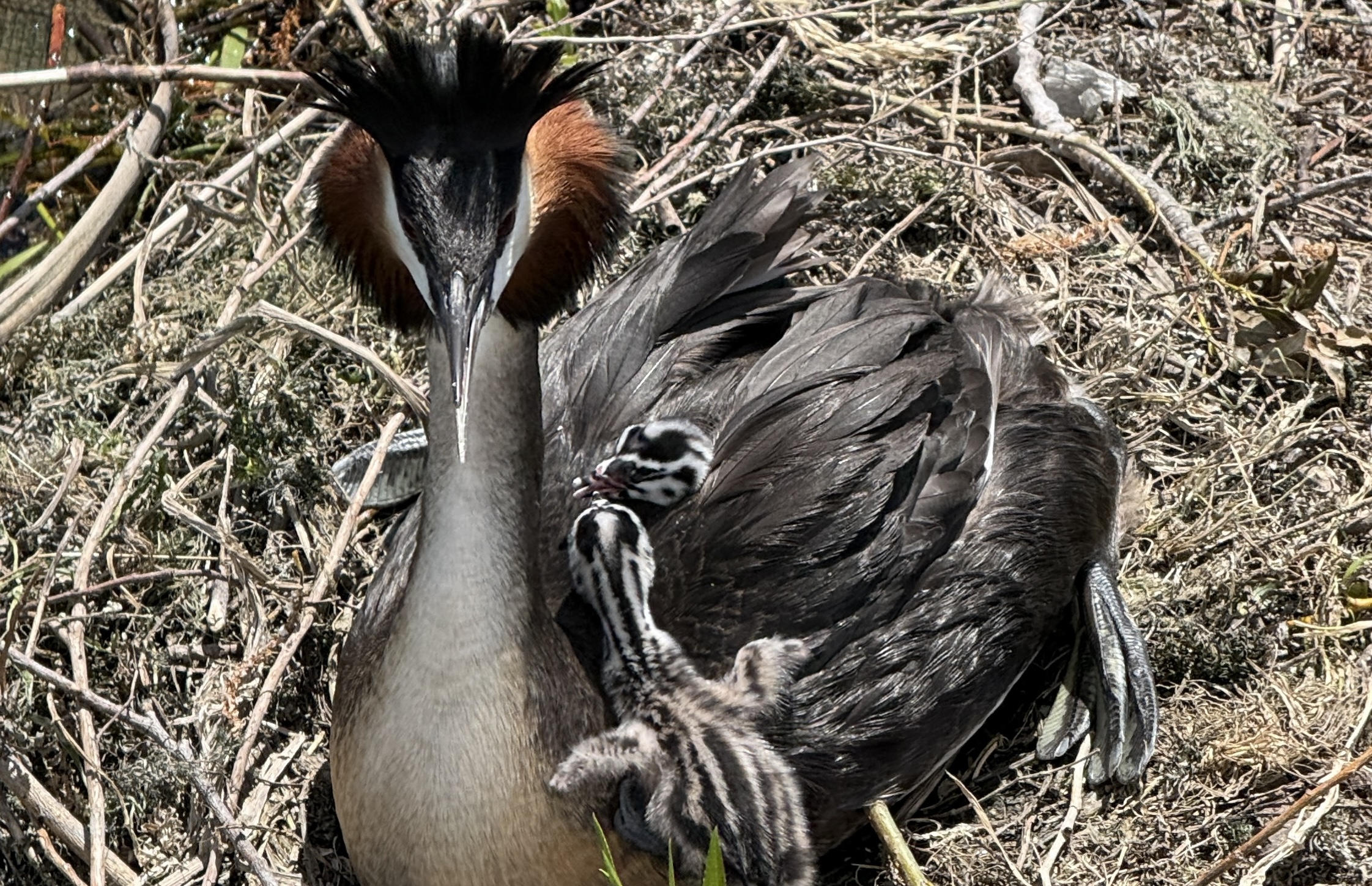 The Grebe breeding season has been late this year.
Grebe nesting activity is in full swing on Lake Wānaka, but an unusually late start to the season, persistently high lake levels and ongoing water quality concerns are creating new risks for the threatened birds.
The Wānaka Grebe Project is managed by Southern Lakes Sanctuary and the Wānaka branch of Forest & Bird. Southern Lakes Sanctuary field crew member Markus Hermanns said this year’s breeding season had begun considerably later than usual, with fewer breeding attempts recorded.
“In an absolute sense we cannot specifically say why this is the case, but for Wānaka we can note that the lake has not been recorded as being consistently that high for such an extended period of time as it has been from September to the present,” he said.
While there are confirmed successful breeding attempts and chicks hatched, Markus said the high lake level was forcing grebes to build nests in risky locations.
“Due to the high lake level there are grebes constantly building nests on the shoreline between the boardwalk and marina, which is not desirable as they won’t be able to reach the nests when the water level drops… or their nests will float away if the water level rises,” he said.
The late season has also seen other birds using grebe platforms more frequently, including Australian coots.

Grebe’s are building nests on the lakeshore causing concern they will not be accessible when the lake level drops.
“This very much reflects the fewer grebe breeding attempts. Competition for platforms is generally fierce and grebes invariably win over all other breeds,” Markus said.
“This year it seemed that both breed parallel, again a sign that not only the grebes bred later this year.”
Markus said precise grebe numbers are difficult to provide, but estimates suggest up to 70–80 breeding pairs can be present in peak season, dropping to fewer than five over winter. Before the Wānaka project began in 2013, only three to four pairs were recorded locally.
“In the first 8 years (2013-2021) of the Wānaka project it is estimated that more [than] 400 chicks were hatched from the marina project and the number of Grebes in Southern NZ had more than doubled,” Markus said.
He said broader environmental pressures are a major concern. “Grebes need clean freshwater lakes as suitable habitat and ecosystem. The decline of the water quality in New Zealand rivers and lakes as well as habitat loss is part of the reason for the decline of the grebe population,” Markus said.
Find out more about the project here.
PHOTOS: Southern Lakes Sanctuary