
Freshwater ambassadors focus on waterway protection

25 December 2025, 6:12 PM
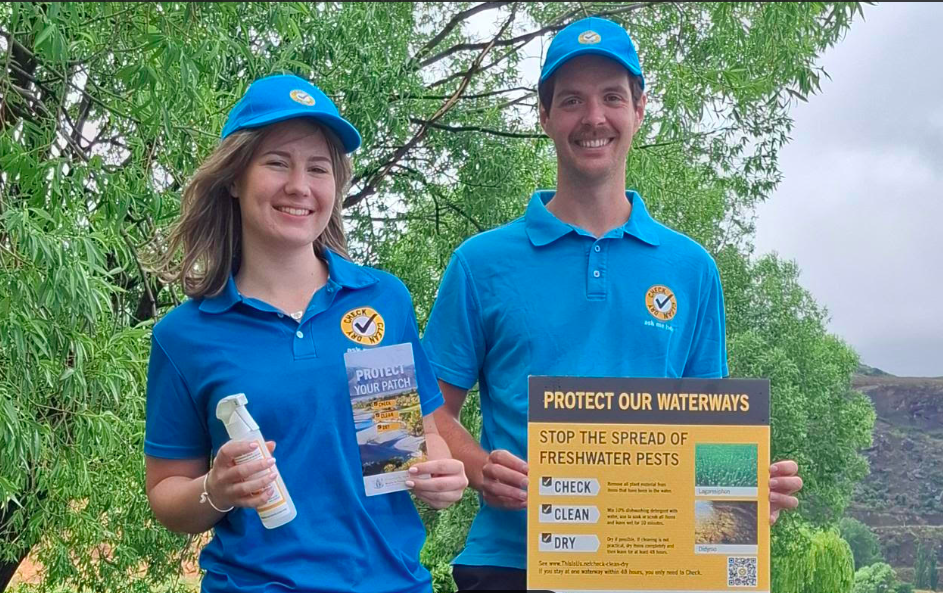 2025-2026 freshwater ambassadors, Zoe Eckhoff (left) and George McLellan (right).
Otago Regional Council’s (ORC) biosecurity team is once again rolling out its summer freshwater ambassador programme - this year with two new ambassadors who will be out and about across Otago’s lakes and rivers over the holiday season.
Ambassadors Zoe Eckhoff and George McLellan will be based out of ORC’s Cromwell office until mid-February, connecting with locals and visitors about how to protect the waterways from freshwater pests.
ORC environmental delivery portfolio lead councillor Robbie Byar said summer is a crucial time to remind people how easily freshwater pests like lagarosiphon and didymo can spread between waterways.
“Even a tiny fragment of lagarosiphon or a drop of water on gear can be enough to transport pests to a new location,” Robbie said.
“But with a few simple actions, like following the ‘Check, Clean, Dry’ method, we can all help protect Otago’s lakes and rivers”.
‘Check, Clean, Dry’ is the Ministry for Primary Industries’ national programme for preventing the spread of didymo, lagarosiphon and other freshwater pests.
The ambassadors’ work focuses on face-to-face engagement - talking with boaties, kayakers, paddleboarders, jet skiers, anglers and other water users about preventing the spread of pests and the importance of leaning equipment between each waterway.
“This boots-on-the-ground mahi really matters,” ORC biodiversity programmes team leader Robert Win said.
“When people meet our ambassadors at boat ramps or river edges, they’re often keen to learn more, and that enthusiasm helps keep pests out of new places.”
While many were already familiar with the Check, Clean, Dry message, it is a great opportunity to enhance best practice and deepen knowledge on applying these measures effectively, especially as new pests emerge, he said.
“The community has been really responsive,” Robert said.
“But the risk is ongoing. Without continued vigilance, freshwater pests - especially lagarosiphon - could seriously impact our most valued rivers and lakes.”
Check - Remove all plant matter from gear and leave it at the site or put it in the rubbish. Never wash plant material down a drain.
Clean - Choose the cleaning method that suits your gear. Guidance is available here.
Dry - Thoroughly dry all gear, inside and out. Once dry to the touch, leave it for a further 48 hours before using it again.
PHOTO: Supplied