

Electrification, emissions reporting, and more: Council progress on climate and biodiversity

Maddy Harker
16 February 2026, 4:04 PM
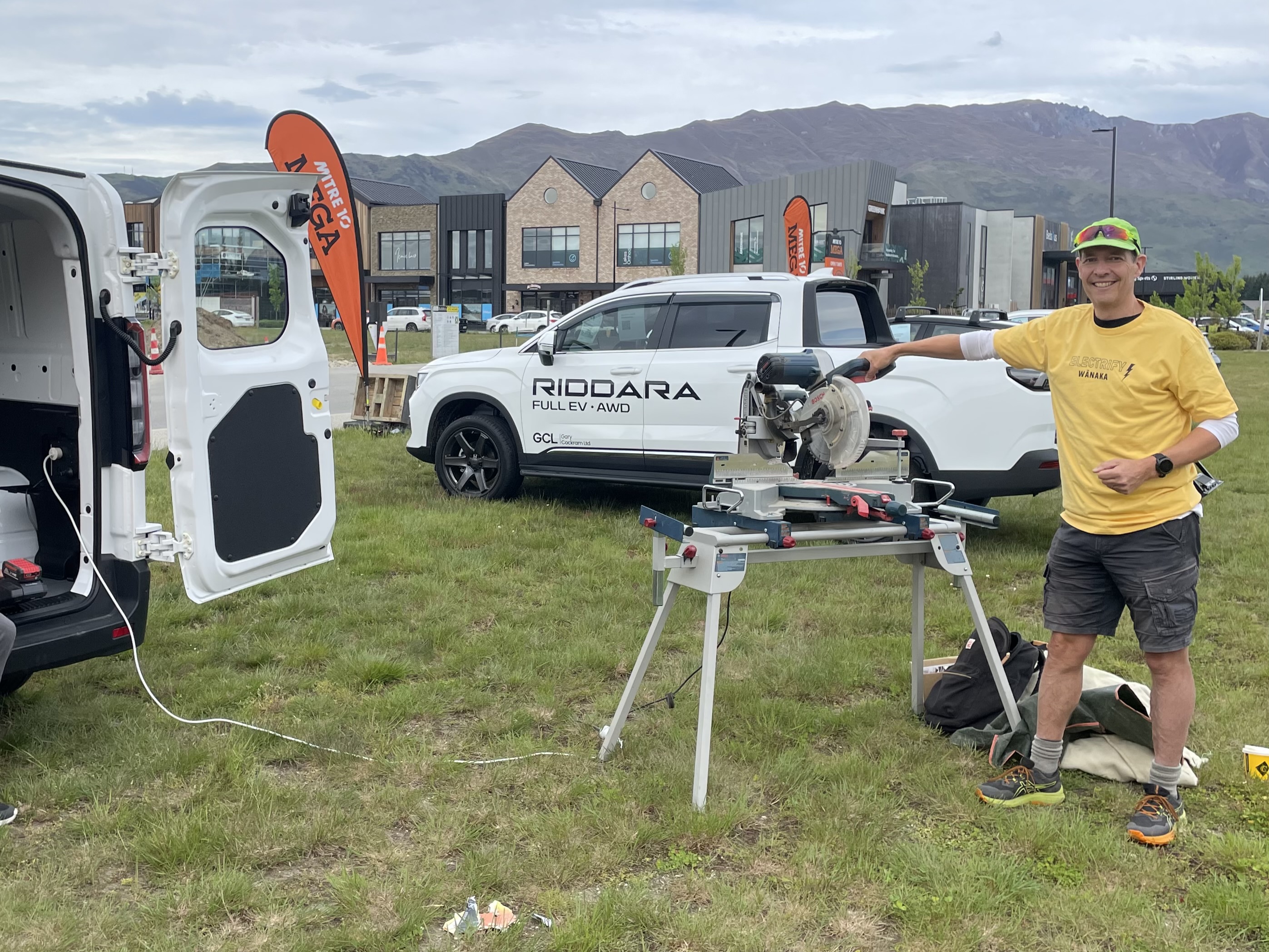 Electrify Wānaka co-founder Jonathan Holmes using a dropsaw powered by an electric vehicle at a recent Mitre 10 MEGA display.
Queenstown Lakes District Council (QLDC) says it is making solid progress on environmental outcomes, six months after adopting its Climate & Biodiversity Plan (CBP) 2025–2028.
The plan sets out more than 50 actions to be delivered over three years, covering areas such as greenhouse gas emissions reporting, electrification, wilding conifer control, and revegetation of council land.
At a council meeting earlier this month, QLDC resilience and climate action manager Bill Nicoll said 48 actions were already under way, with the remainder to begin in the coming year.
He highlighted progress in two key areas: electrification and organisational greenhouse gas emissions reporting.
One of the most significant initiatives is the Queenstown Electrification Accelerator - a pilot project designed to demonstrate how home electrification can reduce both household energy bills and emissions.
If successful, the project could be scaled up across the district to support emissions reductions, energy resilience, and more equitable access to clean energy, Bill said.
The programme is being delivered in partnership with community organisations, which provide independent advice and coordinated support for households and businesses.
These partnerships help “translate council strategy into practical, on-the-ground change”, Bill said.
Progress has also been made on council-wide emissions reporting, which Bill described as a foundation for effective climate governance.
QLDC completed its 2024–25 emissions inventory late last year, with the data independently verified by Toitū Envirocare in November. The inventory provides a baseline to track emissions over time and inform future investment decisions.
“It provides the data and assurance needed to justify major capital investments such as LPG-to-clean-energy conversions, solar and battery systems, and fleet transition, while strengthening council’s preparedness for future climate-related disclosure expectations,” Bill said.
The CBP’s theme is ‘Accelerating Transformation through Partnerships’, with the latest progress report also highlighting collaboration with community groups.
It notes ongoing council support for community-led revegetation projects on reserves, funding and operational backing for the Upper Clutha Wilding Tree Group to remove wilding conifer seed sources, and continued support for Southern Lakes Sanctuary’s predator control and biodiversity monitoring work.
The CBP 2025–2028 is the council’s third action plan since declaring a climate and biodiversity emergency in 2019.
It builds on six years of work that has seen emissions reduced, one of New Zealand’s largest native reforestation projects launched through Project Tohu, and the expansion of community-led initiatives in active travel, revegetation, predator trapping, food resilience, and emergency preparedness.
The full Climate & Biodiversity Plan 2025–2028 progress report is available on the QLDC website.
PHOTO: Supplied
Read more: Plan signals commitment to low-carbon future - council