


Council’s ‘limited powers’ part of dangerous dog problem - LGNZ

Sue Wards, Editor
08 March 2026, 4:04 PM
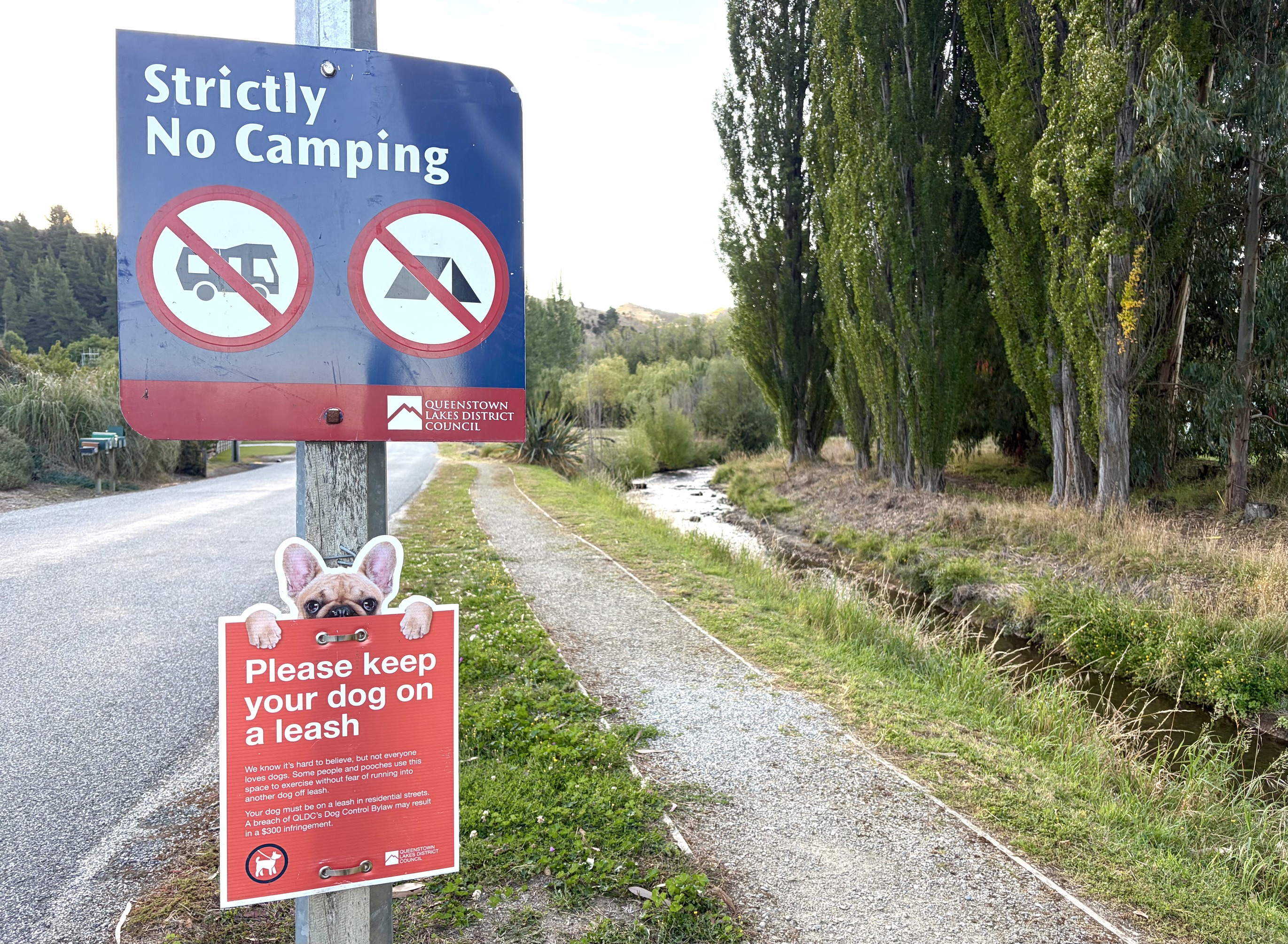 Signage in Luggate requiring dogs to be kept on the leash.
 Frontline dog control staff at councils around the country say legislative change is essential to protect communities from the risk of dog attacks.
Local Government NZ (LGNZ) have responded to a request from Prime Minister Christopher Luxon and Minister for Local Government Simon Watts last month, following the death of a woman who was attacked by dogs in Northland on February 17.
That same week, residents of Queenstown Lakes district publicly expressed their frustrations over the lack of council action over threatening and dangerous dogs.
This included multiple complaints about as many as three mixed breed/pig dogs on a property in Luggate roaming onto other properties, mauling cats, killing hens, attacking a dog, and rushing at children.
Read more: Council has ‘dropped the ball’ on dangerous dogs
The ministers had asked LGNZ to consider what can be done to reduce violent and fatal dog attacks.
LGNZ sought “frontline insights” from dog control staff around the country, and recommended six changes which did not require legislative change:
- Making dangerous dogs a police priority
- Expanding the use of DNA banks to identify dogs causing harm and hold their owners accountable
- Government housing providers to only allow tenants to have dogs if they are registered and have a low risk of causing harm
- Modernise the national dog register to enable faster enforcement and identification of dog owners
- Equip animal control officers with more tools and training to manage dangerous dogs and conflict
- Deliver more proactive registration checks and desexing initiatives.
However, LGNZ reported, most frontline staff said legislative change is essential, saying “... overhauling the Dog Control Act 1996 would have the greatest impact”.
‘Little scope’ for council interventions to keep communities safe
“The core problem is this: local government dog control has limited powers to take sufficient enforcement action early enough to avert serious attacks and put high risk dogs and their owners onto a positive pathway,” the report said.
“The current legal settings mean that for dogs displaying moderate to high levels of aggression – often the precursors to more serious attacks – there is little scope to make decisive interventions to keep the community safe.”
Frontline staff expressed frustration that they cannot step in sooner to prevent harm, even for “lower level” enforcement such as having suitable fencing to confine an aggressive dog.
Frontline staff say just 20 percent of owners are responsible for 80 percent of their work
This reflects concerns raised by Luggate residents, and QLDC dog control officers also said they were frustrated they were not able to undertake more extensive enforcement.
QLDC responds
A Queenstown Lakes District Council (QLDC) spokesperson told the Wānaka App the council would support changes to national dog control legislation “that would ensure it both remains fit for purpose and that councils have the right tools … to manage dog control to protect their local communities”.
While changes to the Dog Control Act are out of scope of QLDC’s bylaw and policy development process, locals will have an opportunity to have their say on local rules in this district later this year.
QLDC has both a dog control policy and bylaw; they were adopted in 2020 and are due for review before June 2027.
Formal consultation - including a public hearing - on a draft new local policy and bylaw will occur later in the year.
PHOTOS: Wānaka App
NEWS