


Talking Masculinities (Caregivers' blog)

Path Wānaka
20 February 2026, 7:00 PM

Why toxic masculinity is a concern, how it can impact your child/teen, and what you can do about it.
Teen boys don’t wake up one day and decide, “Ah yes, today I’ll download some misogyny.” It’s usually quieter than that. A clip here. A “self-improvement” reel there. An algorithm that keeps feeding the same flavour of content until it starts to feel like truth.
That’s why ‘toxic masculinity’ matters. Not because masculinity is bad (it’s not), but because some online spaces sell a narrow, brittle version of it: dominance over empathy, entitlement over respect, feelings are a weakness, porn is education, and consent is negotiable. That worldview can show up as sudden contempt, harsh jokes, controlling behaviour, obsession with status, anxiety about “being a real man,” or pressure to perform sexually before they’re ready. It can also land as loneliness and shame, because the loudest voices online often promise belonging, then charge boys with impossible rules to earn it.
The ‘manosphere’ (think Andrew Tate, Jordan Peterson, Sneako, Fresh and Fit, and plenty of smaller clones) can be sticky because it mixes relatable truths (“life is hard,” “work on yourself”) with harmful conclusions (“power is everything”). Teens are still building identity and values; the internet is happy to build it for them.
So how do we step in as parents, without making every chat feel like an interrogation?
1) Lead with connection, not correction.
Start with curiosity: “What do you like about his content?” “What do you think he gets right?” When your teen feels heard, they stay in the room.
2) Teach pattern-spotting.
Ask: “Who benefits if you believe this?” “What’s the evidence?” “What’s missing?” You’re building critical thinking, not winning a debate.
3) Name your non-negotiables clearly and calmly.
Respect. Consent. Dignity. End of story. Consistent rules, solid boundaries, steady grown-ups - it works.
4) Talk about porn like a safety conversation, not a shame sermon.
Porn is performance, not a relationship guide. Discuss consent, pressure, body image, and what healthy intimacy actually needs - care, mutual respect, and choice.
5) Offer better role models.
Point to men who model strength with kindness. Courage isn’t cruelty. It’s integrity.

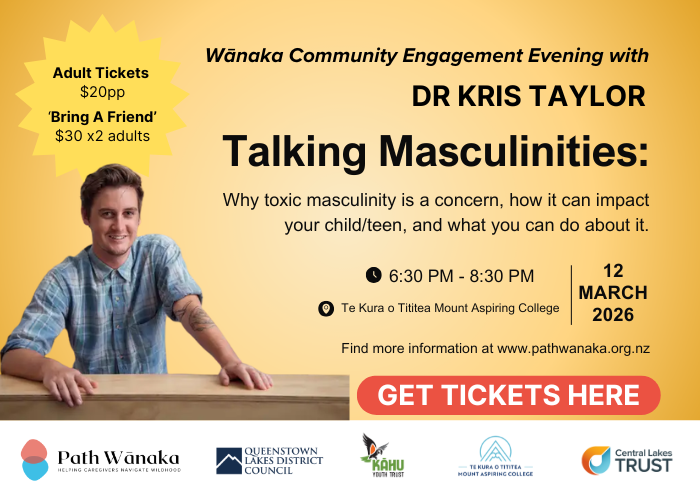
Dr Kris Taylor’s evening presentation on 12 March is for all parents will be a practical crash course to help whānau understand what your teens are seeing online, and how to talk about gender norms, sexism, harassment, misogyny, and pornography without alienating them. If you’ve been thinking, “I need a game plan,” this is your night.
Learn more and book your tickets here.